


How This 68-Year-Old Stroke Survivor Ditched Her AFO Brace — And Started Walking Through Her Own Home Without Holding The Walls Again
"I went from dragging my foot and gripping the stair rail with both hands… to walking to my granddaughter's front door without taking anyone's arm."

It was 4:50 in the morning when I gave up on sleep again. Not because of pain this time. Because of something my granddaughter said the day before that I couldn't get out of my head.
She's seven. At the bottom of the stairs she reached up, took my hand, and said — "It's okay Grandma, I've got you."
She was helping me up the stairs.
I sat in the dark and I cried. Because eighteen months after my stroke, that had quietly become my life. My right foot just… dragged. It wouldn't lift. I caught my toe on the edge of every rug. I held onto the kitchen counter just to reach the fridge. And I looked down at the floor with every single step — I got so dizzy from staring at the ground all day long.
The fear of falling never left. Not for one minute.
And it was the small things that wore me down. Catching my toe on the threshold between two rooms. The exhaustion of planning every single step before I took it. Saying no to dinner at my son's house because I was scared of the steps at his front door. My husband quietly started taking my arm everywhere we went — and I hated that he had to. After everything, I'd become the one being taken care of. That was never supposed to be how this went.
I Was Doing Everything Right — And My Foot Still Dragged

Here's the part that made me want to scream: I was doing everything they told me to.
I wore the rigid plastic AFO brace every single day — even though it gave me blisters, made me buy my shoes a size bigger, and felt like a plastic prison I couldn't hide. I went to physical therapy twice a week… until my insurance capped me at 8 sessions and sent me home with a photocopied sheet of exercises. I did those exercises. Religiously.
And my foot still dragged. Exactly like the day I came home from the hospital.
So I went back to my doctor and asked what actually fixes this. He looked at me and said, "You've probably reached your plateau. The brace keeps you safe."
That was the whole plan. Wear plastic on my leg for the rest of my life and call it recovery.
I found out there was a clinic with a device that could actually help — and they wanted thousands of dollars I simply didn't have. I'm on a fixed income. So that door closed too. Bit by bit, it started to feel like the whole system had quietly written me off and moved on.
I refused to accept that this was as good as it was ever going to get.
I won't call myself anything fancy. But I'll tell you one thing I knew for certain: I did not like this new normal — and I was not done trying to change it.
Then My Sister Sent Me Something That Changed Everything
I was venting to my sister on the phone one night — same as always — when she stopped me and said, "Have you seen this? People in a stroke recovery group keep posting about it."
I'll be honest with you. My first thought was: here we go, another gadget. I'd already wasted money on things that promised the world and ended up in a drawer. I was so tired of being let down.
But one comment stopped me cold. A man named Scott had written:
"I purchased one months ago and it was a game changer. Did it 15 minutes, twice a day. Now no foot drop, no cane, no assistance walking… nothing."
Underneath, a woman with MS wrote that it was "making those parts of my feet and legs work again." Another said she'd stopped using her cane.
These weren't paid actors in a commercial. They were people exactly like me. And there was a 60-day money-back guarantee — so I thought, what do I actually have to lose, except another plastic brace?
I ordered it that night.
The Real Reason My Foot Wouldn't Lift (That Nobody Ever Explained)
When it arrived, I finally understood why nothing else had ever worked.
Here's what no doctor had taken the time to explain: after a stroke, your foot muscle isn't dead. It's still there. What's broken is the signal — the pathway from your brain to your foot got interrupted. Your brain keeps sending the command to lift… and it never arrives.
The muscle isn't weak. It's starving for a signal.
And that's exactly why everything else had failed me:
- The brace just held my foot up. It never woke the muscle underneath — so the muscle kept getting weaker.
- Physical therapy worked while I was there… because my therapist was sending electrical stimulation straight to the muscle. The second insurance stopped paying, that activation stopped too.
- The exercises couldn't work, because I was asking a muscle to respond to a command that wasn't reaching it.
StepNura does the one thing none of them did. It sends the signal directly. Gentle electrical pulses that bypass the damaged pathway and reach the muscle itself — so it finally contracts. Not because my brain commanded it. Because the signal finally got through.
And here's something I didn't expect: it isn't only for stroke. Whether foot drop comes from MS, peripheral neuropathy, or nerve damage after a back injury, the underlying problem is the same — a signal that isn't reaching the muscle. StepNura sends it.
And It Doesn't Matter How Long It's Been
This was the part I almost couldn't believe. I'd convinced myself I was too far out — that if my foot hadn't come back in eighteen months, it never would. But in that same group were people five years, nine years, even thirteen years past their stroke, saying their foot had started responding again.
It makes sense once you understand the mechanism. The muscle doesn't expire. A signal can be sent at any time. It was never about how long it had been — it was about finally reaching the muscle that had been waiting all along.
How StepNura Works (It Couldn't Be Easier)
There's nothing to strap on. Nothing to learn. No appointment to book.
I sit on my couch, place both feet on the mat, and press start. That's it. For 15 minutes I feel a gentle tingle build into a real contraction — my foot actually lifting on its own. I do it while I have my morning coffee.
It works both feet at the same time — which matters, because my "good" leg was exhausted from doing all the work. And you start on the lowest level and build up as your foot responds.
There was something else in the box I hadn't expected — a second set of pads for the hands and arms. Because the stroke didn't just take my foot. My right hand had been weak and stiff since the day it happened, and most days I'd quietly given up on it. Now I use those too.
And Here's What Started To Change
The very first session, I felt my foot move on its own. After eighteen months of nothing, I sat there and cried — for a completely different reason this time.
And it kept going. The dragging got lighter. The stiffness in my calf eased. I stopped catching my toe on the hallway rug. One morning I walked from my bedroom to the kitchen without touching the wall once — and realized halfway there I hadn't looked down at the floor at all.
The little things came back. I stopped reaching for my husband's arm at the shops. I got through my friend's birthday without once thinking about the floor. I crouched down to feed my dog myself — something I'd needed help with for over a year.
And last Sunday, I walked my granddaughter to her front door. She didn't take my hand. She didn't need to.
All of it from 15 minutes a day, sitting on my couch with my coffee. That's the whole routine.
Even The Experts Agree

I'm not a doctor. So after all this, I went and read everything I could find — and it turns out the science behind it isn't new at all. This kind of electrical stimulation has been used in stroke rehab clinics for years.
The same mechanism clinics charge thousands for. Now on my living room floor, for 15 minutes a day.
If Your Foot Still Drags, Don't Wait As Long As I Did
If your foot drags behind you. If you hold the wall to cross your own home. If you look down at every step. If you've been told "this is as good as it gets" — I was there. And I waited eighteen months longer than I needed to.
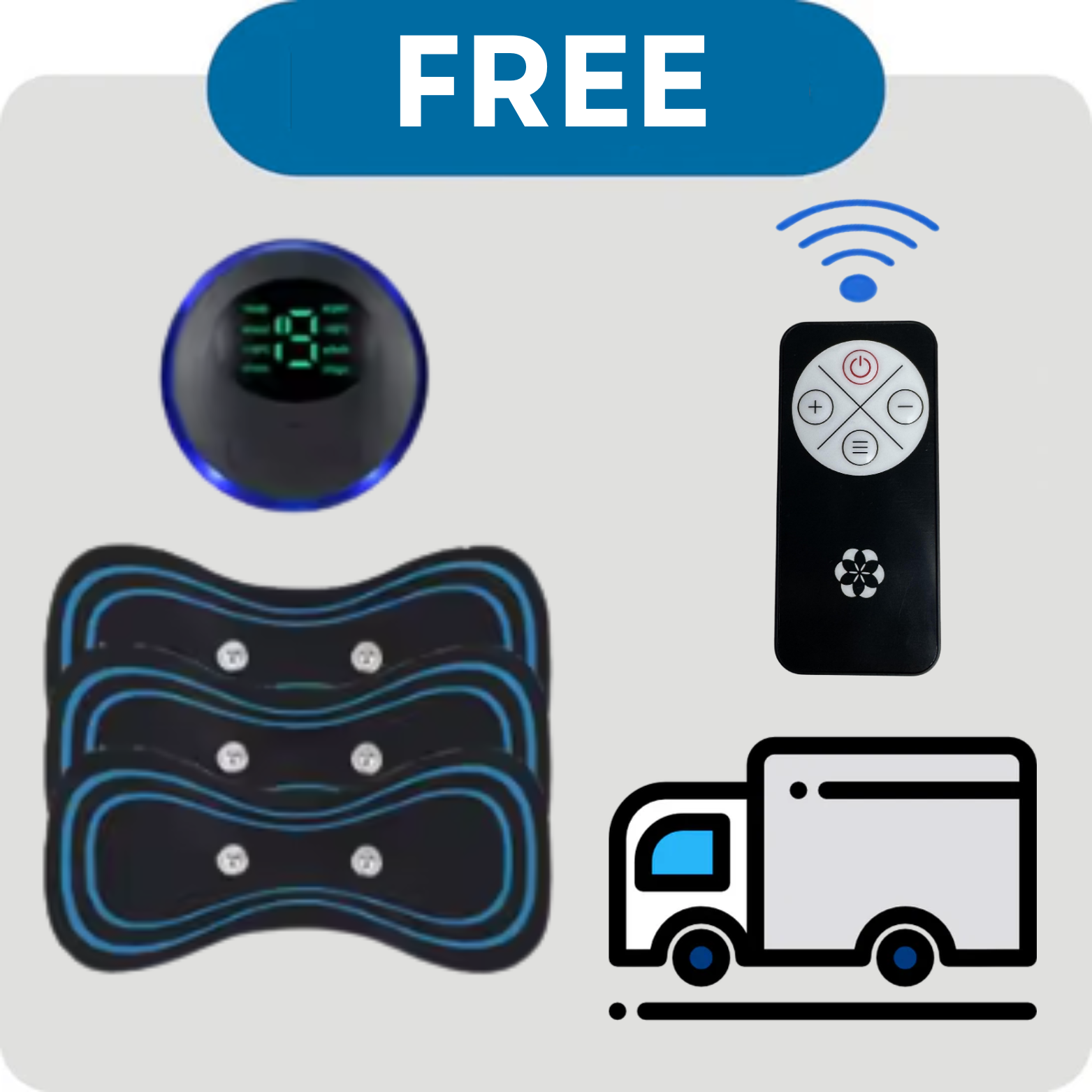
Right now StepNura is 40% off, ships with a free wireless remote and free hand & arm pads, and it's backed by a 60-day money-back guarantee.
The muscle isn't dead. It's just waiting for the signal.
What Others Are Saying